

AI-assisted learning platform helps robots reason beyond literal commands

What happened
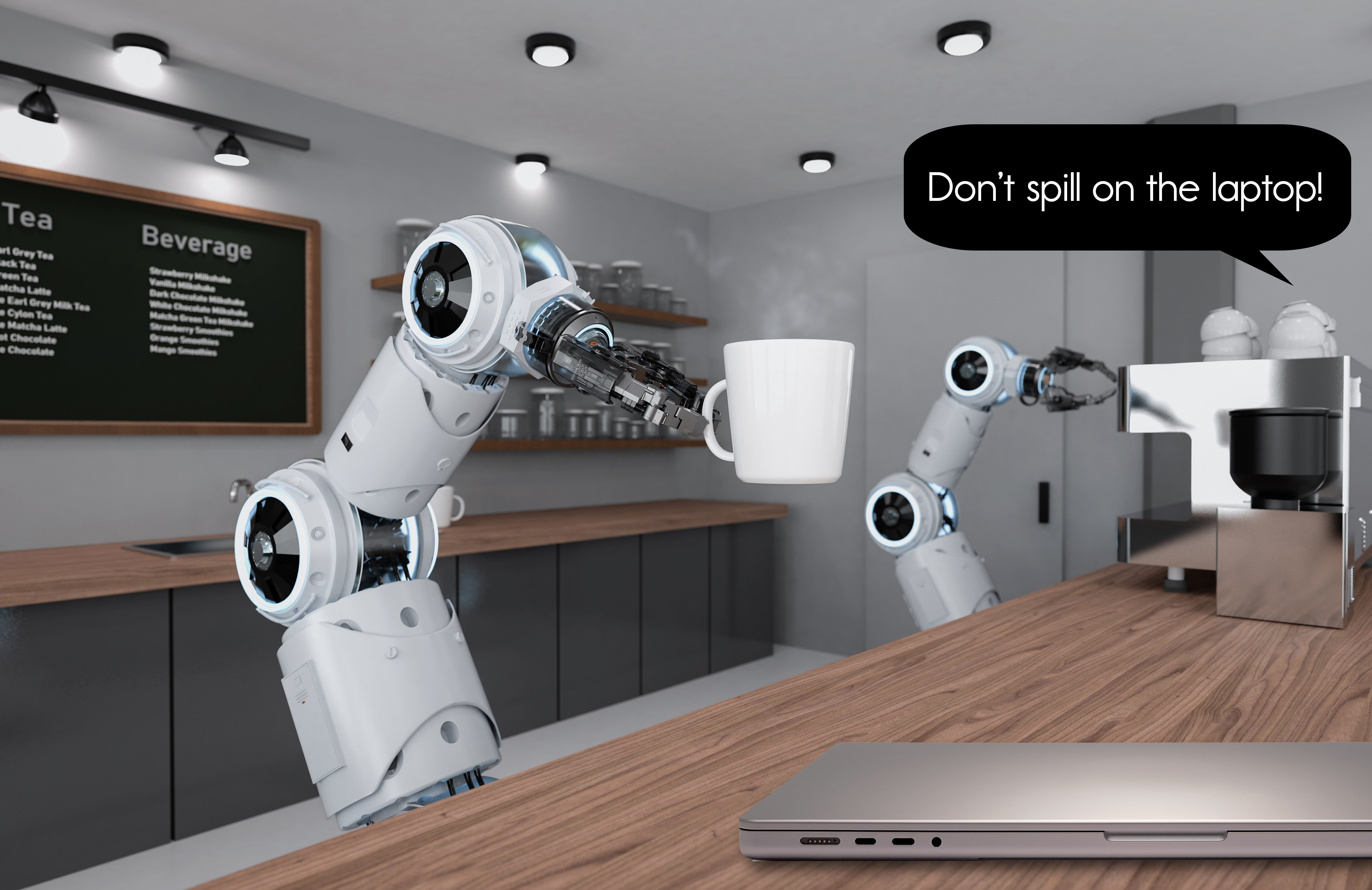
Researchers from MIT and New York University have created a new AI-assisted learning platform called FLEX. FLEX enables robots to interpret natural language commands and infer broader intentions, rather than following only literal instructions. The system uses a large language model to help robots generalize from specific commands and improve their motion planning. The researchers demonstrated FLEX in simulated scenarios, such as a robot serving coffee and avoiding hazards without explicit directions for every detail.
Key details
- FLEX was developed by MIT and NYU researchers.
- The system uses GPT-4o as its large language model.
- FLEX operates in three steps: Add, Generalize, and Mask.
- The platform was tested in simulations, including a scenario where a robot avoids spilling coffee on electronics.
- The process for FLEX to interpret and update its actions takes about five seconds.
Why it matters
FLEX allows people to communicate with robots using everyday language, reducing the need for detailed, technical instructions. This change benefits users of assistive and household robots by making these devices easier and more intuitive to operate. Companies developing robotics can now implement systems that require less user training and can adapt more flexibly to changing environments and user preferences.