

Ai2 Releases ToyBlocks to Test How Robots Learn and Fail
What happened
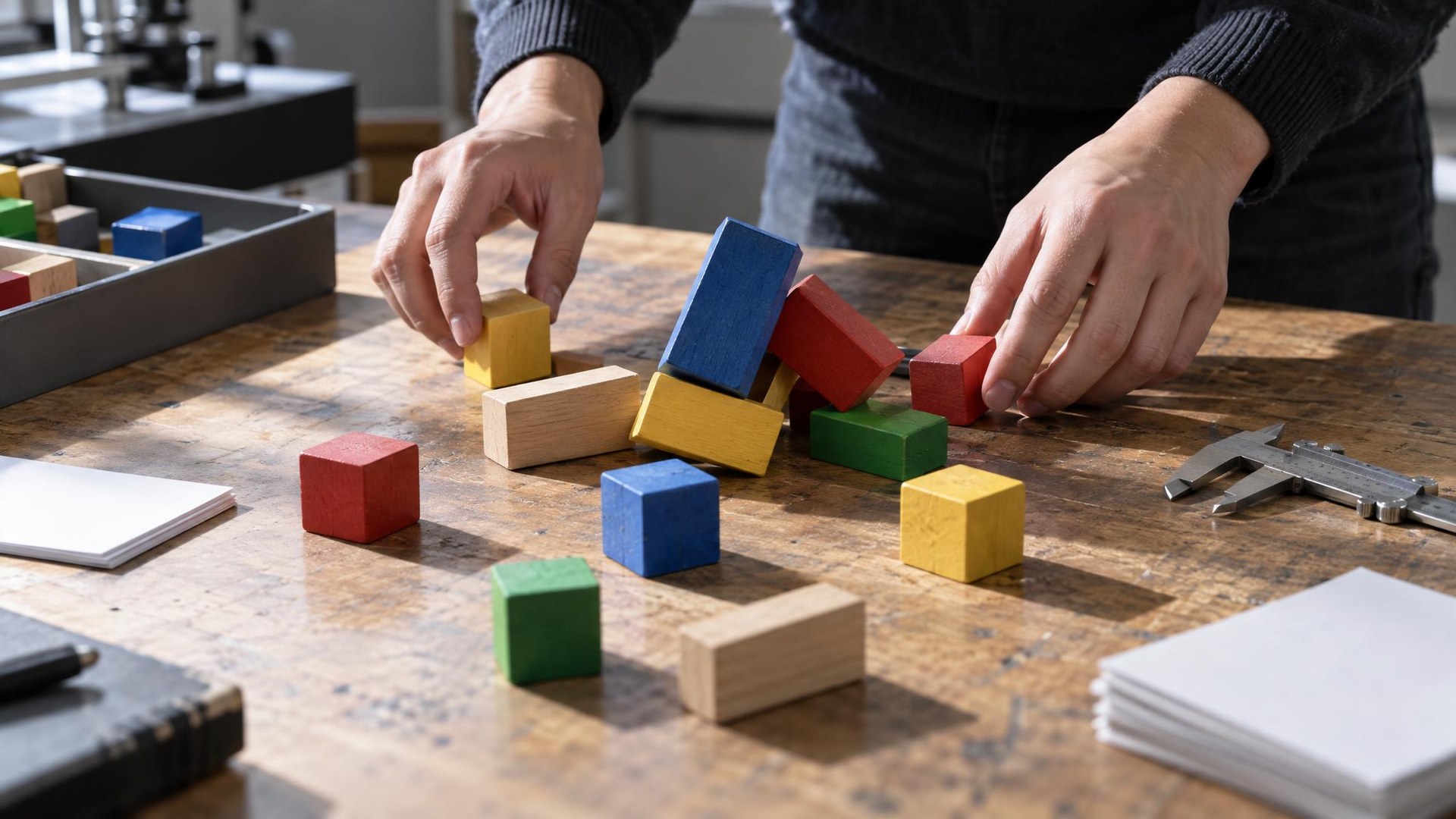
On November 6, 2026, Ai2 released ToyBlocks, the first environment in its FoundationWorlds framework. ToyBlocks provides a simulated tabletop setting where a robotic arm manipulates labeled blocks through various tasks that require both reasoning and dexterity. The environment includes over 85,000 generated demonstrations, two trained models, and evaluation tools, all designed to make robot learning experiments repeatable and to help researchers analyze failures. The release is open source, with datasets and code available under permissive licenses.
Key details
- ToyBlocks launched with 85,336 demonstrations covering about 1,600 hours of robot execution and 144 million frames.
- The environment uses Nvidia's Isaac Lab for automated demonstration generation and supports scalable task creation.
- Two models are included: Molmo2-4B-tb (about 4.5 billion parameters) for planning and ManiFlow-tb (322.5 million parameters) for action generation.
- Physical robot tests used a Franka FR3 arm and achieved a 50% success rate for the hierarchical system in real-world episodes.
- All data and code are released under ODC-BY and Apache-2.0 licenses, with subsets for easy, medium, and hard tasks.
Why it matters
Researchers working on robot learning can now use ToyBlocks to generate, train, and evaluate models in a controlled, repeatable environment, reducing the need for physical robot experiments. The open release of large-scale demonstrations and models enables others to benchmark and compare their own systems. This gives robotics and AI developers a new toolset for diagnosing failures, improving generalization, and advancing robot reasoning and manipulation capabilities.