

Deep learning-based gait analysis predicts multisystem health phenotypes

What happened
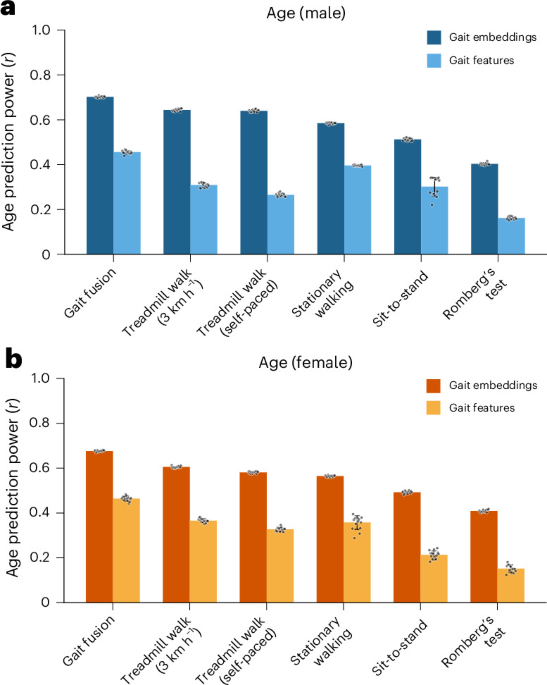
A team of researchers created a deep learning model that analyzes how people walk using 3D skeletal motion data. They collected movement data from 3,328 adults as they performed five different motor tasks. The model was able to predict a wide range of health characteristics based on these walking patterns. The study was published on November 9, 2026.
Key details
- The model used 3D skeletal motion data from 3,328 adults.
- Participants completed five motor tasks while being recorded by a depth camera.
- The model predicted 1,887 out of 3,210 health phenotypes.
- Predictive improvements were seen across all 18 body systems in men and 17 in women.
- The model also improved predictions of clinical diagnoses and medication usage.
Why it matters
Healthcare providers and researchers can use this model to assess health across multiple body systems using simple movement data, potentially leading to earlier or more accurate diagnoses. This approach could make it easier to identify health risks or medication needs without relying solely on traditional tests. Patients may benefit from more comprehensive health assessments based on how they move.