

Measuring how AI agents handle everyday wet-lab science


Also covered by 1 source
What happened
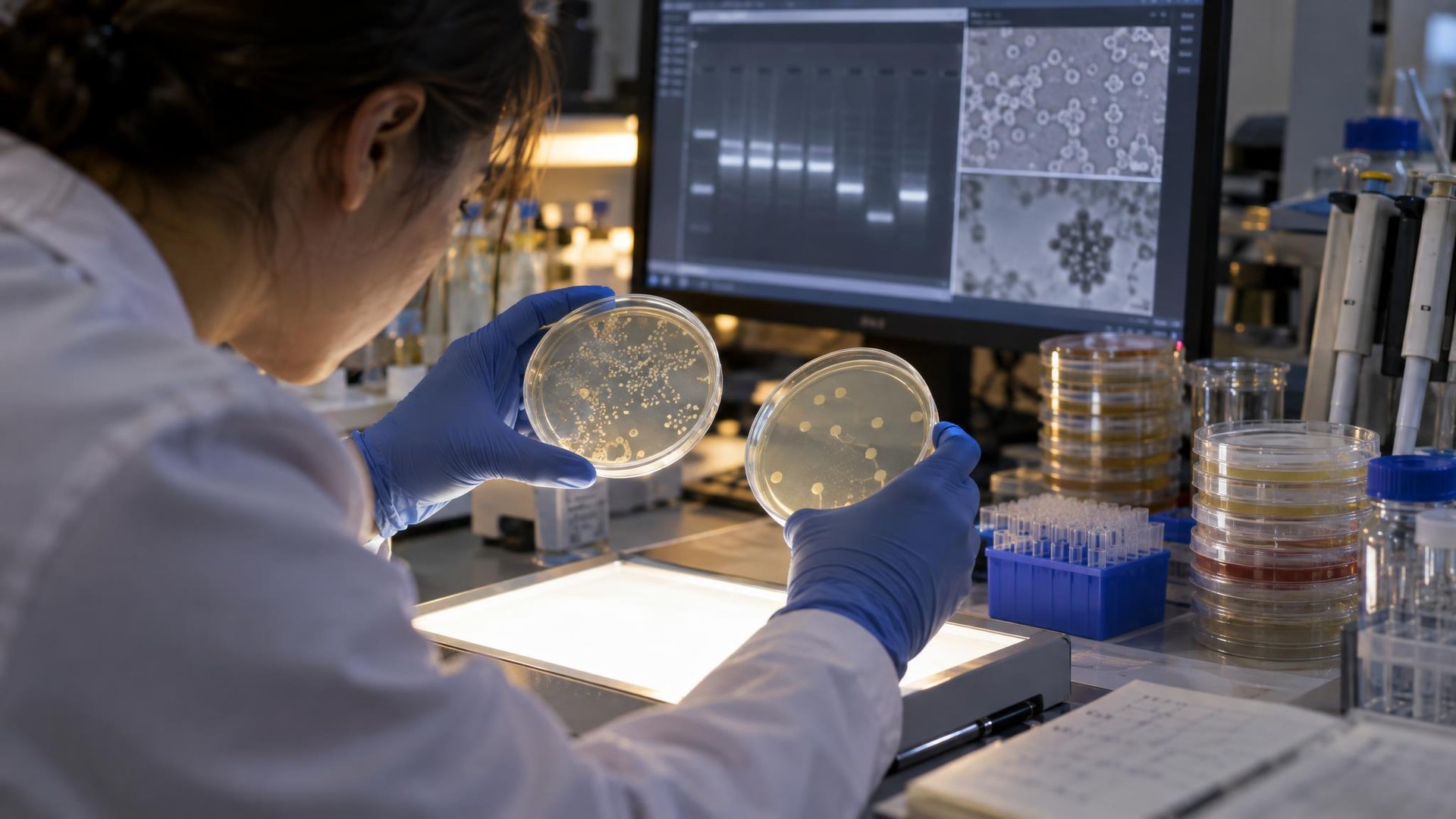
On November 6, 2026, OpenAI released BioBasicsBench, a benchmark of 100 tasks developed with enzyme-design company Ligo. The benchmark is designed to test how well AI agents can interpret raw data from routine wet-lab experiments. It evaluates agents on tasks such as analyzing experimental evidence, identifying errors, and determining when data is insufficient for a conclusion. OpenAI tested several models on this benchmark, with GPT-6 Astra achieving the highest scores among them.
Key details
- BioBasicsBench contains 100 tasks based on real wet-lab experiments.
- Tasks include interpreting gel images, colony plates, microscopy stacks, sequencing reads, and protocol videos.
- GPT-6 Astra scored 66.7% mean reward at the highest reasoning setting; GPT-5.6 Sol scored 43.8%.
- Each task was reviewed by both internal and external PhD-level wet-lab scientists.
- The evaluation generated 18,500 results across 37 model and reasoning-effort settings.
Why it matters
Researchers and developers working on AI for laboratory science can now use BioBasicsBench to measure and compare how well their systems handle real-world experimental data. This benchmark sets a higher standard for AI agents, requiring them to not only interpret evidence but also recognize errors and limitations in the data. The results show that even top-performing models like GPT-6 Astra still make significant mistakes, highlighting the need for further improvements before these systems can reliably assist in laboratory decision-making.