

Single-cell machine learning uncovers genetically anchored, cell-type specific programs of Alzheimer’s disease

What happened
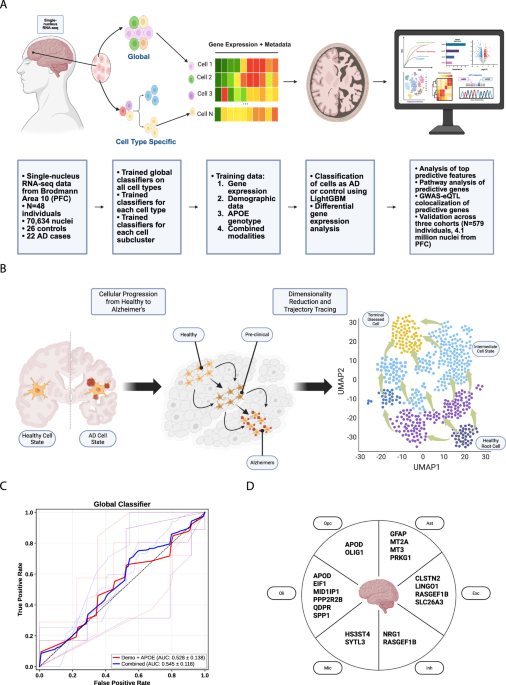
A team of researchers created a machine learning framework called TriSCOPE to analyze single-nucleus RNA sequencing data from 4.2 million brain cells. They used this tool to identify gene programs specific to different cell types that are linked to Alzheimer's disease. The analysis covered samples from 627 donors, all from the dorsolateral prefrontal cortex, a brain region involved in executive function. Their approach combined predictive modeling, differential gene expression, and trajectory inference to find genes and pathways associated with Alzheimer's that previous methods had missed.
Key details
- TriSCOPE integrates multivariate modeling, differential expression, and pseudotime trajectory analysis.
- The study analyzed 4.2 million nuclei from 627 human brain donors.
- Data was collected from the dorsolateral prefrontal cortex.
- Researchers identified 27 genes linked to inherited Alzheimer's risk that were not detected by standard differential expression analysis.
- Findings were validated in independent cohorts and across six major brain cell types and 41 subclusters.
Why it matters
Scientists studying Alzheimer's disease now have a new method to pinpoint specific genes and pathways in different brain cell types that are associated with the disease. This enables researchers and drug developers to focus on targets that were previously undetectable using standard analysis methods, potentially leading to more precise interventions. The approach also provides genetic evidence linking certain genes to inherited risk, which can inform future studies and therapeutic strategies.